
- News
- Sports News
- The big picture: Who owns cricket?
Trending
This story is from July 13, 2007
The big picture: Who owns cricket?
Is it the ICC, a limited company registered in the British Virgin Islands, since it tops the game's hierarchy?
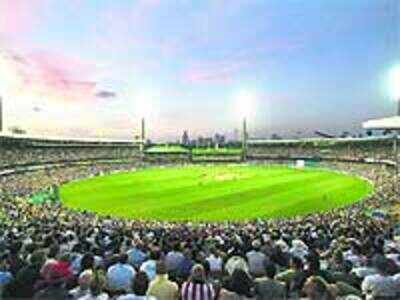
Is it the ICC, a limited company registered in the British Virgin Islands, since it tops the game's hierarchy?
The story till now: Zee head honcho Subhash Chandra plans to bankroll Rs 100 crore into his still nascent Indian Cricket League (ICL); the BCCI feels this goes against its "policy".

How exactly the ICL goes against BCCI "policy" has not been made clear, and neither has the nature of the "discussions" sought by the ICC with Stanford.
Confusion seems to be the best form of defence.
Which is not to say that Chandra, Stanford and their monies — like the BCCI, ICC and theirs — have only "the best interests of the game as a whole". Or that anybody should be allowed to buy into the game just because he is a somebody with deep pockets. Or even that the authority of governing bodies — even if they are as unprofessional and politicised as the BCCI, or fall short of being the sum of their parts like the ICC — be challenged for the sake of it under the garb of democraticising sport.
Weigh in the way out
The point is, when servants of a game believe they are its masters, they erroneously confuse participation in the processes of sport and accountability for ownership and non-accountability (see: Grey Area and Questionable... But Answerable?).
Since governing bodies hold a monopoly on representative/formal games, the BCCI has imposed a blanket definition — "unauthorised" — on matches the ICL seeks to organise, and has warned that it will initiate action against whomsoever is associated with the ICL. Similarly, the ICC wants Stanford's Twenty20 series to be consistent with its own Future Tours Program (FTP) and ongoing broadcasting deal, and could well scrap the event if it chooses to.
Though they have very little else, the BCCI and ICC have legality on their side. If their steps are tripped up, Chandra and Stanford would have a righteous sense of grievance, but very little else.
But those who know it best are aware that reality is far more complicated. The two issues referred to must be resolved and not swept under the carpet. Else, cricket would have very little to show as evolution.
Win-win. And how...
The ICL and Stanford's Twenty20 series need to be seen as what they are — alternatives. TINA sounds good, but like laxatives, alternatives are good for the system.
The ICL model offers the alternatives of (i) teams with branding comprising a mix of Indian and foreign players as compared to the sate/zonal nomenclature and territory-specific restriction of domestic cricket (ii) lower entry level for sponsors as compared to the crores of rupees required to seal the deal with the BCCI for international fixtures (iii) competitive matches between a few, evenly-matched teams as compared to a slew of sides and lop-sided games in first-class cricket.
A cross between domestic and international cricket, the ICL attempts to simulate, to an extent, India's fairly successful Premier Hockey League (PHL). And, if the ICL model is tweaked a bit by coupling big names on the roster with shrewd marketing to approximate the hugely successful club format of European football, perhaps non-international cricket in India would finally be able to earn its own upkeep.
And, possibly, we would have the mother of all solutions to the players' contracts problem — with inter-team transfers in place, there would be a definitive figure on how much each cricketer is worth.
The Stanford model extends the alternatives of (i) a thrills-and-spills-packed week-long event as against a shoddily-organised World Cup spread over almost two months (ii) Rs 93 crore at stake for just a handful of matches as compared to the Rs 130 crore that accrued from ticket revenue to the West Indies Cricket Board (WICB) from the 52 matches of the World Cup.
Here again, the Stanford model, if tweaked a bit, can benefit on a periodic basis not only full-time ICC member boards but also ICC associate/affiliate members and individual cricketers too. Those who remember the Cricketers' Benefit Fund Series (CBSF) of the Sharjah days would realise that there are enough billionaires out there ready to fund cricket for a cause, especially when it is a profitable exercise.
And no, despite the highly imaginative comparisons, Chandra can't ever do a Packer since cricketers — and so far the ICL has none worth the name and will, in all likelihood, have to make do with retired internationals, domestic no-hopers and those past their sell-by date — are paid way too handsomely for money to be the lure as it was then.
The worst that the ICL can do to "threaten" the BCCI's "authority" is stage "rebel" matches reminiscent of the apartheid years. Similarly with Stanford and the ICC.
Fool marks for confusion
The trouble is that those who purport to administer the game do not recognise alternatives for what they are, leading to situations best avoided (see: 'Member Boards', 'Players' in Whose Game Is It Anyway?).
Had the BCCI sanctioned the ICL's application for affiliation, in the same manner that it has okayed the Sheesh Mahal, Buchi Babu, Goswami Ganesh Dutt and Moin-ud-Dowla tourneys, there would have been no issue to speak of.
And in the event of the ICL being a success, the board would have elicited credit for greenlighting the event. Again, if Stanford's Twenty20 series had been billed as a WICB event with no mention of the individual, it would have been a non-issue for the ICC, which would probably have circumvented its own FTP and cleared the event by now.
Ironically, by showing their insecurity, the BCCI and ICC have afforded the ICL and Stanford's Twenty20 series more publicity than they could have managed themselves.
Great minds think alike, a learned someone once said. Then how do fools differ, asked another.
Like the question in the headline forced upon us by these two organisations, this one too demands an answer.
* We, in the context of Indian cricket, refers to nobody and everybody — the average fan, who is drawn more to the spectacle of the game than the game itself, as proved by the near-empty stadia for domestic matches. The average fan makes no claims to the ownership of cricket and couldn't be bothered less by which acronym operates in the game — the ICC, BCCI, ICL, ABC or XYZ — as long as the show goes on.
End of Article
FOLLOW US ON SOCIAL MEDIA
Visual Stories




Top Sports News
TOP TRENDING
Trending Stories
In Sports
Entire Website
- Ja'Marr Chase Luxurious Lifestyle: Expensive Properties, net Worth, Car Collections and More
- Nikki Bella’s ex-husband Artem Chigvintsev absolved of domestic violence charges
- Vince McMahon addresses Chris Benoit tragedy in his latest docuseries
- Tracing the complicated relationship of Vince and Linda McMahon after 5 decades of marriage
- 3 Reasons Why The Bloodline 2.0 Must Defeat Cody Rhodes, Roman Reigns At Bad Blood
- Paedophile coach dies weeks after found guilty of raping and sexually abusing six female students
- 3 Reasons Why Bad Blood 2024 Will Make An Epic Return To WWE PLE Calendar
- Border Gavaskar Trophy: When Rishabh Pant breached fortress Gabba for Team India's historic victory against Australia
- Women's T20 World Cup 2024: Full schedule, dates, timings and venue
- Women's T20 World Cup 2024: Teams, format, and prize money
- 'Prepare for entry': Israeli forces brace for possible ground operation in Lebanon
- Mumbai rains: 4 dead so far; flights diverted, schools, colleges shut
- Explained: Why SC wants to label ‘child pornography’ CSAEM
- 7-yr-old boy stripped, beaten, given electric shocks by teacher for forgetting bag
- 'Bada aadmi ban gaya!' How 'unknown' Virat's interview was celebrated
- Lipstick row: Chennai's only woman dafadar transferred for 'not carrying out duties'
- Israel has no choice but to escalate conflict with Hezbollah
- OpenAI’s CTO Mira Murati resigns: Read what CEO Sam Altman said
- Leopard traps fail as goat baits turn into feast's for thieves in UP's Bijnor
- 'Hindus go back': BAPS temple vandalised in US; 2nd incident in month

Popular Categories
Hot on the Web
Top Trends
Trending Topics
Living and entertainment
Latest News
BJP is ending reservation by ending permanent jobs, government education, says HoodaAstraZeneca gets nod to launch cancer drugMountaineers scaled unclimbed high peak, names it 'Tsangyang Gyatso Peak’ after Sixth Dalai LamaKaun Banega Crorepati Season 16: Amitabh Bachchan recalls the shooting of 'Sara Zamana' from Yaarana; says 'I was getting electric shocks'Why do kangaroos box and drown predators?India chess federation announces Rs 3.2 crore rewards for Olympiad-winning teams‘Yek Number’ trailer launch: Aamir Khan, Raj Thackeray, Rajkumar Hirani and Sajid Nadiadwala grace the eventIndia urges citizens to avoid travel to Lebanon amid escalating tensionsLeo, Daily Horoscope Today, September 26, 2024: Positive developments are expected in love lifeJ&K will never have a BJP government: Mehbooba MuftiChina conducts rare publicised test launch of ICBMVijay Deverakonda extends best wishes to Jr NTR’s 'Devara' team head of releaseRam Charan's 'Game Changer' new single promo to be out of THIS date“I’m just taking every day, I can’t control” - WWE Star Big E's Return UpdateJanel Grant’s lawyer says Mr. McMahon Netflix docuseries only “scratches the surface” of his personalityMammootty and Vinayakan starrer goes on floors in NagercoilHeavy rain floods Chennai roads, disrupt traffic, and cause power outagesGujarat schoolboy Drona Desai scores 498 in Under-19 tournament
Copyright © 2024 Bennett, Coleman & Co. Ltd. All rights reserved. For reprint rights: Times Syndication Service